
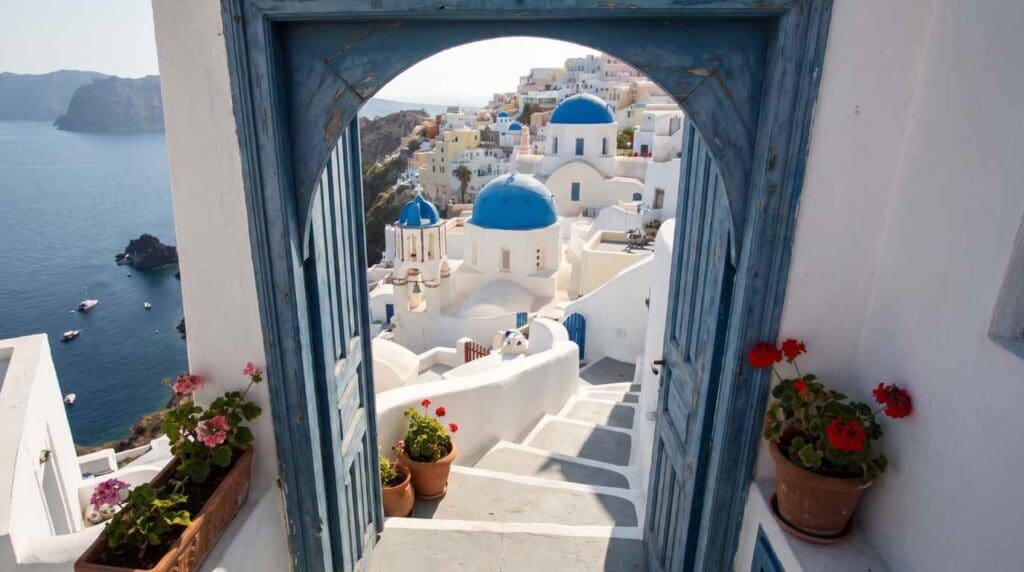
You have booked the flights, or you are about to. Then the doubt creeps in. Go in July and you get long days and warm sea, but also packed alleys and peak prices. Go in March and you get the island almost to yourself, but half the terraces are shut and the wind bites.
Santorini is not a place with one right answer. The best time to visit Santorini depends on what you are optimising for: heat, quiet, budget, swimming, or that specific golden-hour light everyone photographs.
This guide takes the guesswork out. It covers Santorini weather month by month, when crowds peak and thin, when prices rise and fall, and which travellers each season suits. By the end you will know exactly which month fits the trip you actually want.
Quick Answer: When Is the Best Time to Visit Santorini?
The best time to visit Santorini is late April to early June and September to October, the shoulder seasons. You get warm weather in the low-to-mid 20s Celsius, swimmable sea, long daylight, and far smaller crowds than July and August. Peak summer offers the hottest weather and warmest water but the highest prices and heaviest crowds. Winter is quiet and cheap, though many venues close.
Santorini’s Seasons at a Glance
Santorini has a Mediterranean climate: hot dry summers, mild wet winters, and very little rain from June to September. The island runs on a tourism calendar that maps closely onto that weather.
Before the month-by-month detail, here is the shape of the year.
| Season | Months | Weather | Crowds | Prices |
|---|---|---|---|---|
| Shoulder (spring) | Apr to early Jun | Mild, warming | Moderate | Mid |
| Peak (summer) | Jul to Aug | Hot, dry | Heavy | Highest |
| Shoulder (autumn) | Sep to Oct | Warm, sea still warm | Moderate, easing | Mid, falling |
| Off-season (winter) | Nov to Mar | Cool, some rain | Sparse | Lowest |
The pattern is simple. The weather is best in July and August, but so is everything you might want to avoid. The shoulder months trade a few degrees of heat for space, value, and calm.
Santorini Weather by Month
Weather is the single biggest driver of when to go. These are typical average ranges; individual years vary, so check a forecast close to your dates.
Santorini in January and February
The coldest, wettest window. Daytime highs sit around 12 to 15 Celsius, nights drop to single digits, and rain and wind are common. The sea is too cold for swimming.
- Weather: 12 to 15 Celsius, frequent showers, strong winds
- Good for: budget travel, solitude, photography without crowds
- Watch for: many hotels, restaurants, and ferries reduced or closed
Santorini in March and April
Spring arrives. March stays cool and changeable, but by April days warm into the high teens and low 20s, wildflowers appear, and the island reopens. Sea temperature still sits on the cool side for swimming.
- Weather: 16 to 20 Celsius by April, occasional rain easing through the month
- Good for: hiking, sightseeing, Easter travel, lower prices
- Watch for: sea around 16 to 17 Celsius, still brisk for swimming
Santorini in May and June
For many travellers, this is the sweet spot. Days are warm and reliably sunny, the sea warms enough to swim by late May, daylight stretches long, and the summer crush has not fully arrived.
- Weather: 22 to 27 Celsius, dry, long sunny days
- Good for: swimming, weddings, honeymoons, comfortable sightseeing
- Watch for: June crowds building fast toward month end
Santorini in July and August
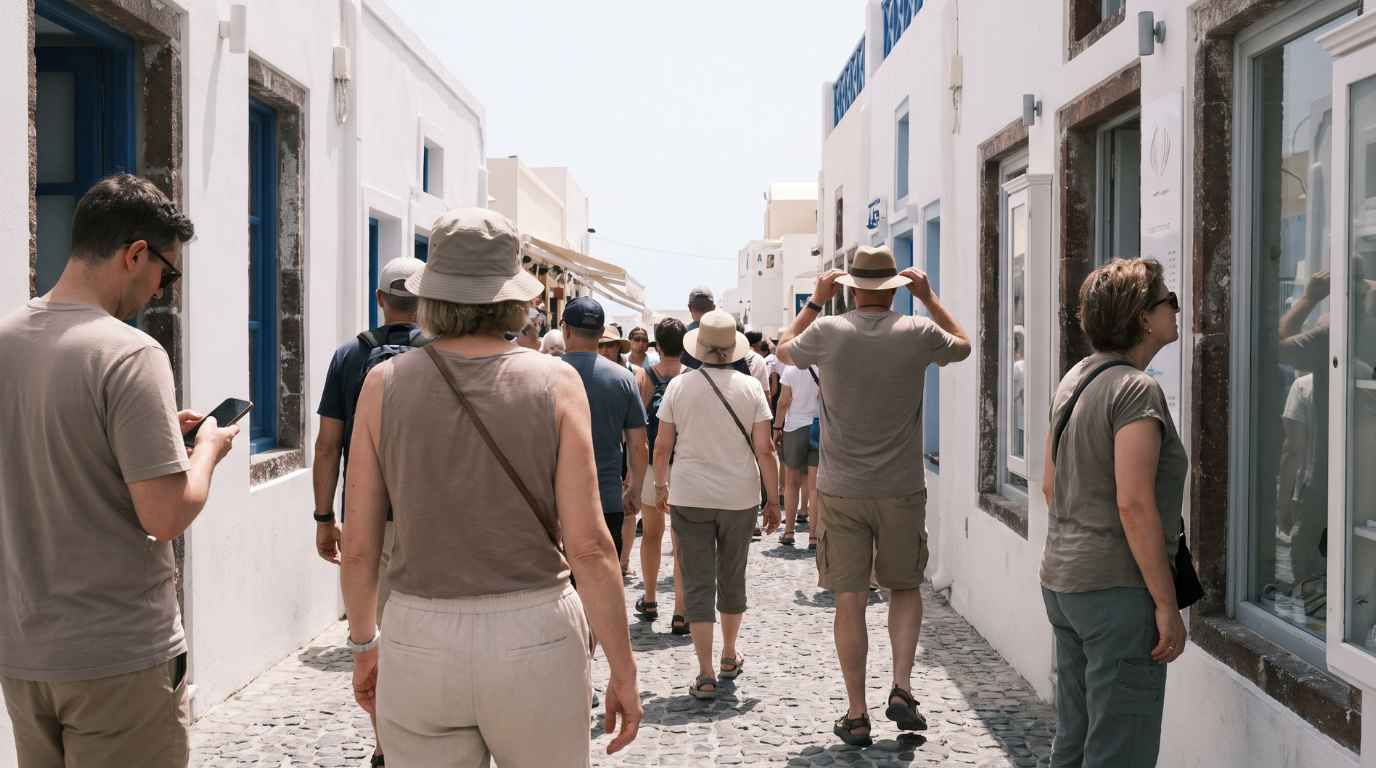
Peak summer. The hottest, driest, busiest, and most expensive months. Highs reach the low-to-mid 30s, the sea is at its warmest, and the meltemi wind can pick up and cool things down while making ferries choppy.
- Weather: 28 to 33 Celsius, very dry, warmest sea of the year
- Good for: beach days, nightlife, guaranteed sunshine
- Watch for: peak prices, packed viewpoints, meltemi winds, booking well ahead
Santorini in September and October
The autumn sweet spot. September holds summer warmth with thinner crowds, and the sea stays warm well into October thanks to a whole summer of stored heat. October cools gradually and prices drop.
- Weather: 20 to 28 Celsius, sea still warm, first rains possible late October
- Good for: swimming without the crowds, wine harvest, romantic trips
- Watch for: some venues starting to wind down late October
September and October are strong enough to deserve their own case. Our guide to Santorini in October covers the weather, exact sunset times and what stays open, including the late-October clock change.
Santorini in November and December
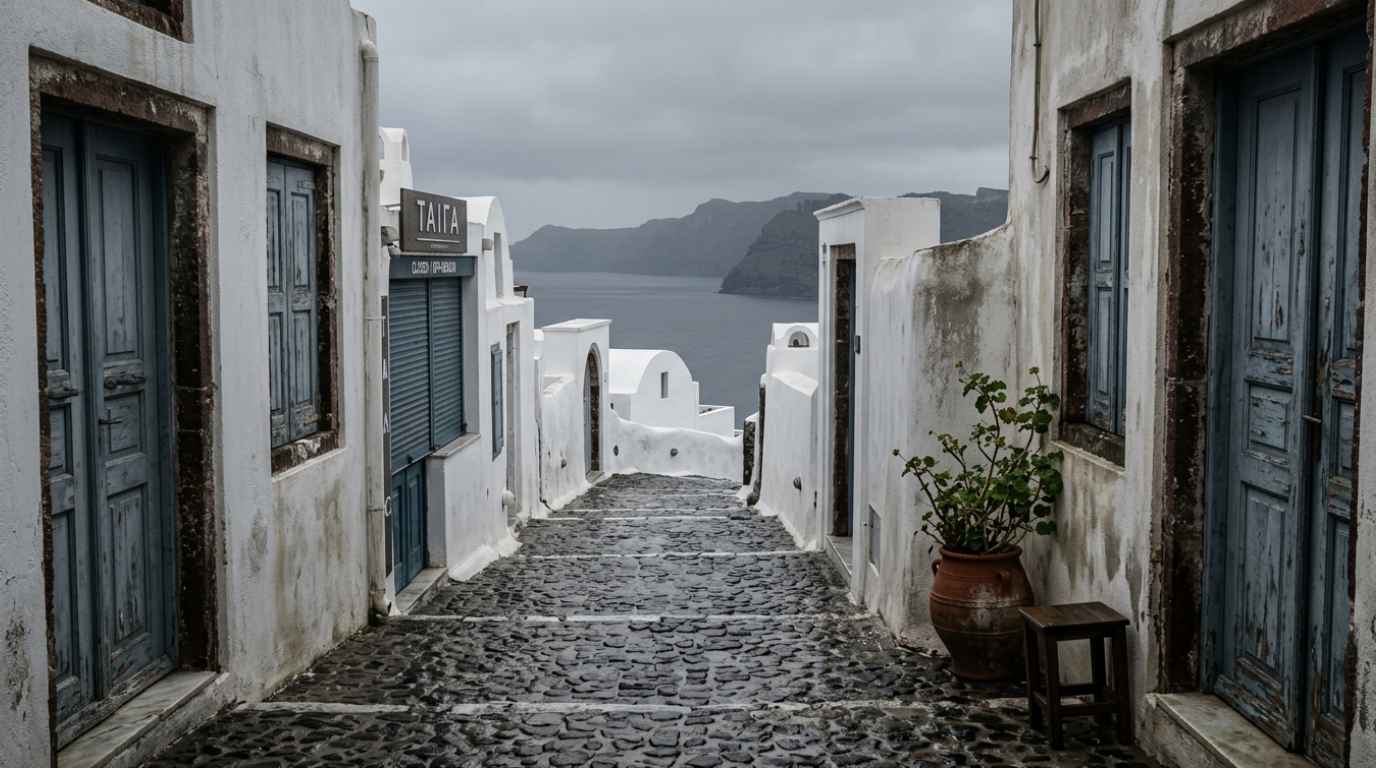
The island slows to a winter pace. Temperatures fall into the teens, rain increases, and many businesses close for the season. December brings a quiet, low-key charm for travellers who do not need the beach.
For November specifically, our guide to Santorini in November covers the weather, the exact sunset times and what stays open once the season ends.
- Weather: daytime highs around 17 to 20 Celsius in November, cooler by December, wetter, shorter days
- Good for: lowest prices, complete quiet, a different side of the island
- Watch for: limited openings, reduced ferry and flight schedules
When Is the Cheapest Time to Visit Santorini?
The cheapest time to visit Santorini is November to March, when accommodation and flights fall well below summer rates. The catch is that many venues close and the weather turns unreliable.
For value that still comes with good weather, the shoulder months win. Prices in late April, May, September, and October typically run meaningfully lower than the July and August peak, while the island stays fully open and warm.
- Rock-bottom prices: November to March, but reduced openings
- Best value with good weather: late April to early June, September to October
- Highest prices: July and August, plus holiday spikes
Tip: book accommodation and any caldera-view dinners several weeks ahead for peak and shoulder dates. The best terraces sell out first regardless of season.
When Should You Visit to Avoid the Crowds?
To avoid crowds, target May, early June, late September, and October. You keep warm, swimmable weather while skipping the density of high summer.
Crowd pressure in Santorini is not evenly spread. It concentrates by place and by hour.
- By place: Oia and Fira absorb the most foot traffic, especially near sunset
- By hour: cruise-ship arrivals swell the caldera towns midday, then ease by evening
- By season: July and August are relentless; shoulder months breathe
Practical move: even in peak season you can dodge the worst of it by exploring caldera towns early morning, spending midday at a beach or vineyard, and returning for a booked sunset rather than a standing-room viewpoint.
Best Time to Visit for Your Kind of Trip
The right month depends on why you are going. Match the trip to the season.
Honeymoons and romantic trips
Choose late May to June or September to October. You get warm evenings, long golden hours, and enough calm to actually feel alone together. Peak August is romantic in theory and crowded in practice. For a day-by-day plan, see our Santorini honeymoon itinerary.
Beach and swimming
July and August give the warmest sea, but the water stays comfortably swimmable from June through October. September is the quiet swimmer’s month: warm sea, thinner beaches.
Hiking and sightseeing
Spring and autumn are ideal. The Fira-to-Oia caldera trail, the Akrotiri excavation, and the island’s villages are far more pleasant at 22 Celsius than at 33. April and October reward walkers with mild air and clear light.
Wine tasting
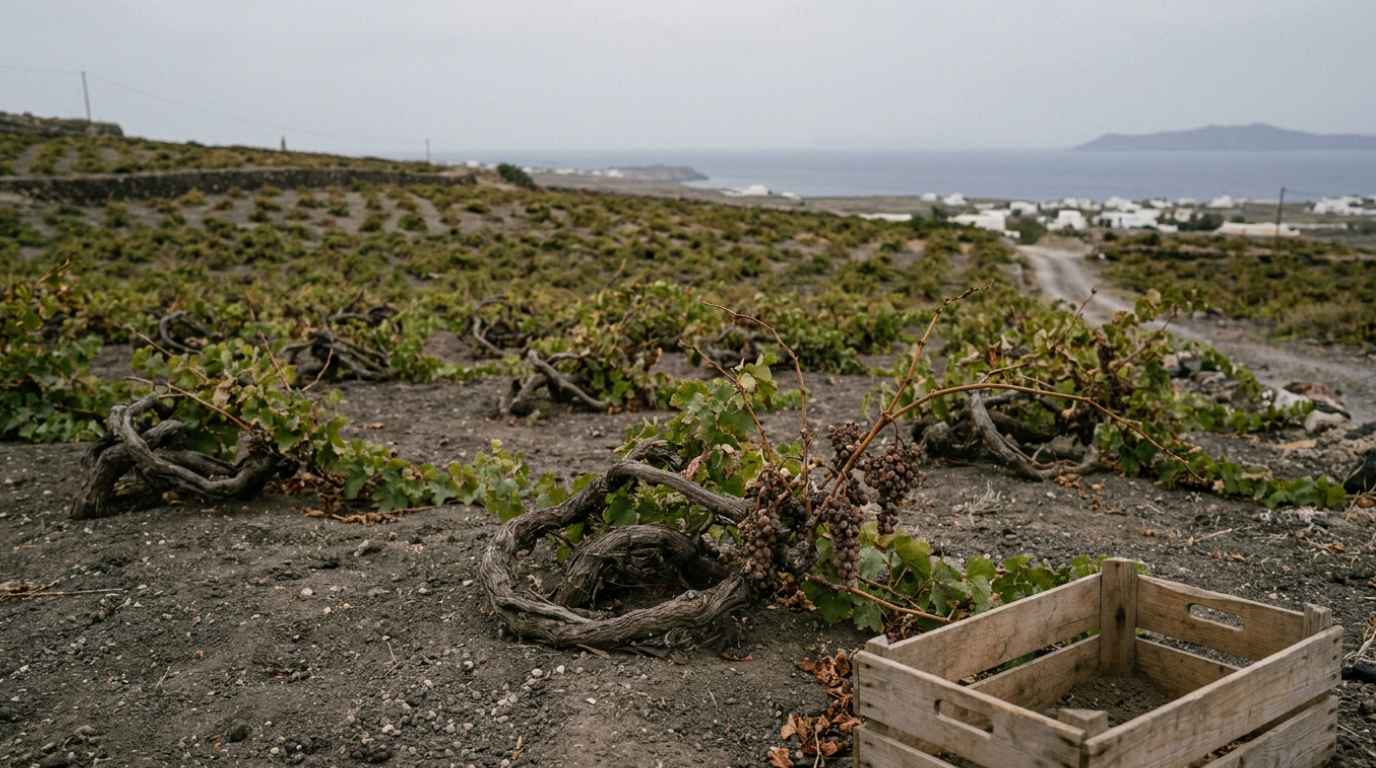
Santorini’s volcanic vineyards produce Assyrtiko, Aidani, and other distinctive island wines, and tastings run across the season. The autumn harvest window adds atmosphere, while spring pairs tastings with wildflower-covered vines.
Guided tours let you visit several estates without driving, which matters if you plan to taste properly. Operators such as Wineland Tours run wine-focused day tours across the island’s producers. Cap a tasting day with a caldera-view dinner and you have the island’s food-and-wine story in a single evening.
Budget travel
Late April, early May, and October give the best mix of open venues, decent weather, and lower prices. Deep winter is cheaper still, but you trade away the experience most people come for.
What About the Sunset?
Whenever you visit, the sunset is the event. Its timing shifts by more than three hours across the year, from around 8:40pm in late June to just after 5pm in December, which changes when you plan dinner.
Summer gives the latest, longest golden hours; winter gives early, dramatic skies suited to an early dinner. If you want to time a meal to the light, check the exact sunset for your dates in our month-by-month sunset time guide, and book your table to start about 45 minutes before.
Packing by Season
What you bring should follow the month, not the postcard.
- Summer (Jul to Aug): light breathable clothing, strong sun protection, swimwear, comfortable shoes for cobblestones
- Shoulder (Apr to Jun, Sep to Oct): daytime summer clothes plus a light layer for breezy evenings
- Winter (Nov to Mar): warmer layers, a windproof jacket, and a rain layer
Comfortable footwear matters year-round. Santorini’s villages are built on steep steps and uneven stone.
A Quick Word on the Meltemi Wind
One weather factor surprises first-time visitors: the meltemi, a strong dry north wind that blows across the Aegean mainly in July and August. It cools the heat, which is welcome, but it can disrupt ferry schedules and make exposed terraces breezy.
If you travel in peak summer and rely on ferries, build a little flexibility into your itinerary. A windy day can delay a crossing.
Conclusion: Match the Month to the Trip You Want
There is no single best time to visit Santorini, only the best time for you.
If you want the hottest weather and warmest sea and do not mind crowds or cost, go in July or August. If you want that same warmth with room to breathe and better prices, the shoulder months of late April to June and September to October are hard to beat. If you want quiet and low prices above all, and can accept closures and cooler days, winter delivers.
Decide what matters most first: heat, quiet, budget, or swimming. Then pick the month that serves it. Do that, and Santorini rewards you in whichever season you choose.
Whenever you come, one thing stays constant. The sun still drops into the caldera every evening, and a well-timed table still turns that moment into the highlight of the trip.
Plan your sunset evening
Book your sunset table in Oia
Our terrace is open in season, from spring to the end of October. Tell us your dates and we will seat you 45 minutes before that evening’s sunset.
Frequently Asked Questions
What is the best time of year to visit Santorini?
The best time to visit Santorini is the shoulder seasons: late April to early June and September to October. These months offer warm weather in the low-to-mid 20s Celsius, swimmable sea, long daylight, and smaller crowds than peak summer, along with lower prices than July and August.
What is the cheapest time to visit Santorini?
The cheapest time to visit Santorini is November to March, when flights and accommodation drop well below summer rates. However, many restaurants, hotels, and ferries reduce service or close in winter. For low prices with reliable weather, late April, May, and October offer the best value.
When is the best time to visit Santorini to avoid crowds?
To avoid crowds, visit in May, early June, late September, or October. You keep warm, swimmable weather while skipping the density of July and August. Even in peak season, exploring Oia and Fira early morning and booking sunset dinners helps you sidestep the busiest hours.
What is the weather like in Santorini by month?
Santorini has a Mediterranean climate. Winter (November to March) is mild and wet, with daytime highs from around 17 to 20 Celsius in November down to 12 to 15 Celsius in January and February. Spring (April to June) warms from the high teens to the mid-20s. Summer (July to August) is hot and dry at 28 to 33 Celsius. Autumn (September to October) stays warm at 20 to 28 Celsius with the sea still warm.
Is the sea warm enough to swim in Santorini?
The sea is comfortably swimmable from June through October, warmest in August, and still pleasant into October thanks to stored summer heat. In spring the water sits around 16 to 18 Celsius, on the brisk side for most swimmers. Winter is too cold for swimming.
What is the best month to visit Santorini for a honeymoon?
Late May to June and September to October suit honeymoons best. These months deliver warm evenings, long golden-hour light, and calmer surroundings than crowded peak summer, making it easier to enjoy romantic dinners and quiet moments together.
What is the meltemi wind and when does it blow?
The meltemi is a strong, dry north wind that blows across the Aegean mainly in July and August. It cools the summer heat but can disrupt ferry schedules and make exposed terraces breezy. If you travel in peak summer and rely on ferries, build some flexibility into your plans.
Is Santorini worth visiting in winter?
Yes, if you value quiet and low prices over beach weather. Winter brings mild but cool temperatures, occasional rain, and a peaceful, local atmosphere. The trade-off is that many businesses close for the season and ferry and flight schedules are reduced, so plan carefully.
When is sunset in Santorini?
Sunset in Santorini ranges from around 8:40pm in late June to just after 5pm in December. The long summer evenings suit late dinners, while winter’s early sunsets pair well with an early meal. Check the exact time for your dates and book a table about 45 minutes before.
How many days do you need in Santorini?
Three to four days suit most travellers, enough to see Oia and Fira, watch a sunset, visit a beach or vineyard, and take a caldera boat trip. Add days if you want to slow the pace, hike the caldera trail, or explore quieter villages away from the main towns.