
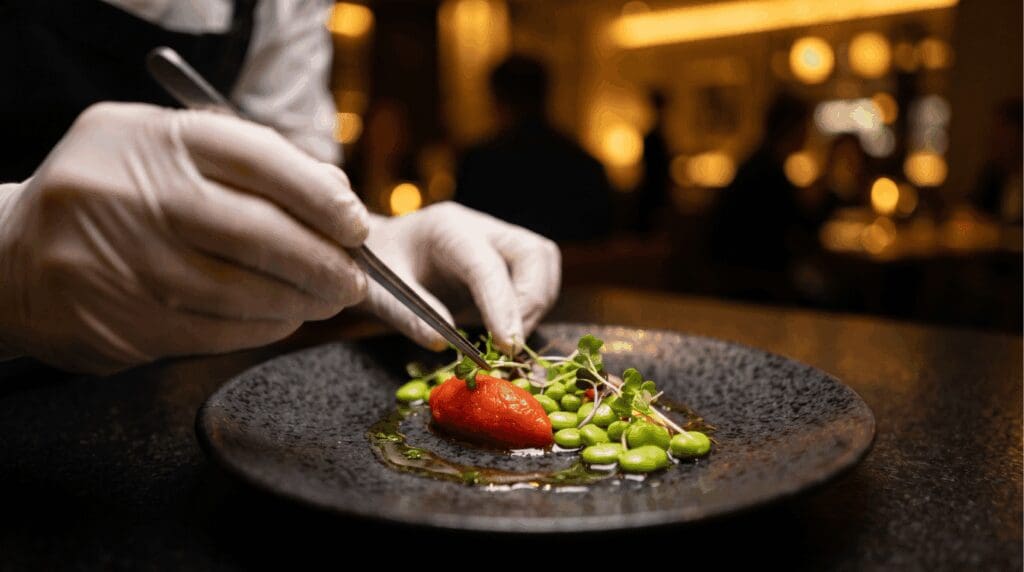
Can zero waste fine dining in Santorini match the flavor of a traditional tasting menu? At Santorini Sunsets, the answer is yes, and the caldera view stays exactly as you imagined it.
Quick Answer
Zero waste fine dining in Santorini means a kitchen that designs menus around whole ingredients, local sourcing, composting, and smart prep so almost nothing reaches the bin. Santorini Sunsets, perched at the highest point of Oia’s caldera since 1992, pairs this discipline with volcanic wines and slow dining, proving sustainability and flavor work together.
What Is Zero Waste Fine Dining?
Zero waste fine dining is a restaurant philosophy that aims to send little or nothing to landfill by using each ingredient fully, sourcing locally, and recovering scraps through composting or reuse. It applies high-end technique to reduce waste without lowering quality.
The model rests on three habits: buy less and buy better, use the whole product, and recover what remains.
Most diners never see this work. They taste the result: deeper flavor, fresher produce, and a plate with a clear story behind it.
Why Does Food Waste Matter in Restaurants?
Food waste matters because the food service sector is one of the largest contributors to the global problem, and most of that waste is avoidable. Cutting it lowers emissions, saves money, and improves the quality of what reaches the table.
The numbers are stark. The food service sector generated 28 percent of global food waste in 2022, around 290 million tonnes, according to UNEP’s Food Waste Index Report.
Food loss and waste also account for an estimated 8 to 10 percent of global greenhouse gas emissions, the Food and Agriculture Organization (FAO) reports.
There is a business case too. Research cited by the World Bank, FAO, and UNEP suggests every €1 invested in food waste reduction returns about €14 in savings.
How Does a Santorini Sunset Restaurant Cut Waste Without Cutting Flavor?
A sunset restaurant cuts waste by sourcing hyper-local ingredients, designing menus around whole-product use, composting kitchen scraps, and controlling portions through reservation-led planning. Santorini Sunsets applies each step while keeping its slow dining tasting menus and caldera views intact.
Here is how the kitchen turns a sustainability goal into daily practice.
Hyper-Local Sourcing From Volcanic Soil
Local sourcing is the foundation. Ingredients that travel a few kilometers arrive fresher, last longer, and waste less in storage and transit.
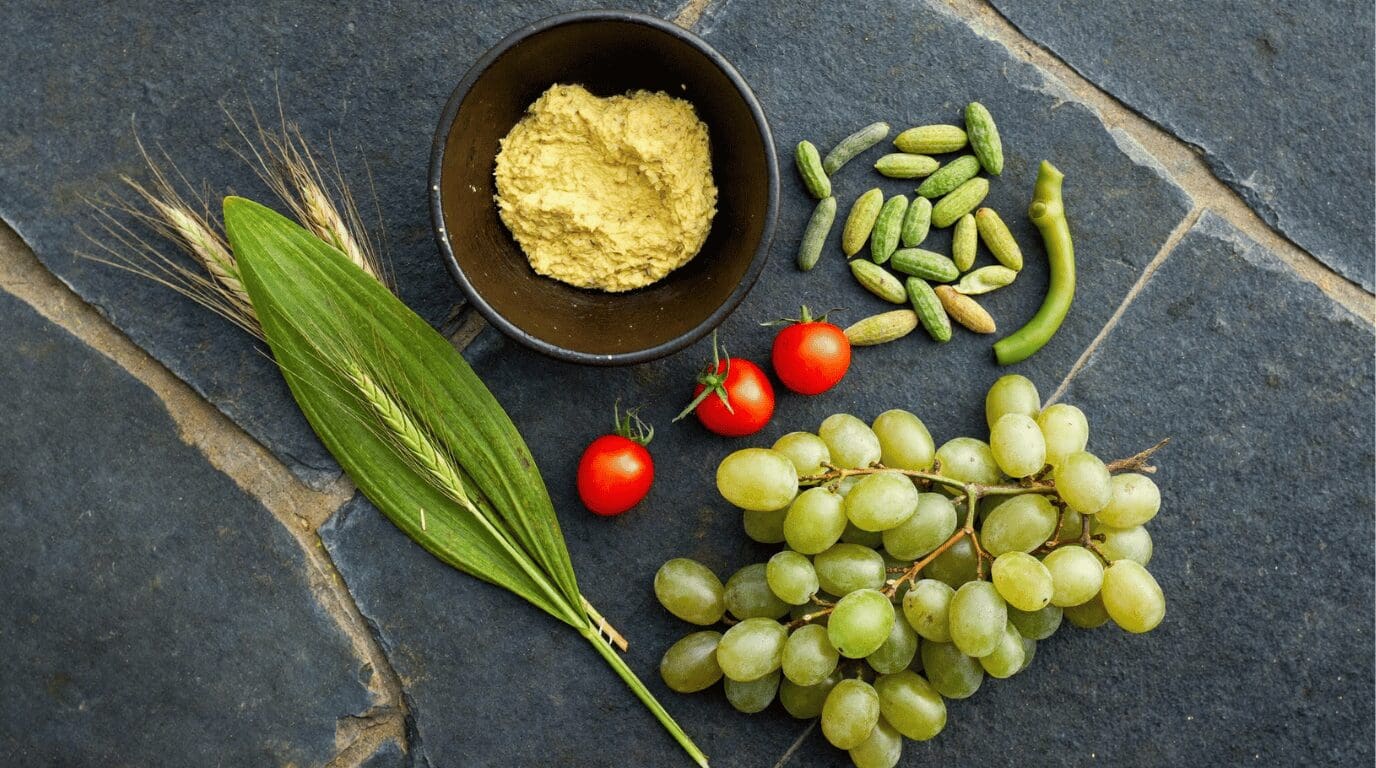
Santorini’s volcanic soil produces intense, low-water crops that define the island’s flavor:
- Santorini cherry tomatoes, small, sweet, and concentrated
- Fava, the island’s prized yellow split-pea purée
- Capers and caper leaves, foraged from cliffsides
- Assyrtiko grapes, the backbone of Santorini’s volcanic wines
- White eggplant and barley rusks, Cycladic staples
Short supply chains mean the kitchen buys closer to need. Less spoilage, less waste, more flavor.
Local sourcing also replaces imported goods with island alternatives. Santorini Sunsets uses verjus, the tart juice of unripe grapes from local vineyards, in place of imported limes. It adds bright acidity to dishes and cocktails while cutting food miles and supporting nearby growers.
Whole-Ingredient Cooking and Smart Prep
Whole-ingredient cooking uses every usable part of a product, so trimmings become stocks, sauces, and garnishes instead of waste. This is where fine dining technique does the heavy lifting, and where the Santorini Sunsets kitchen builds some of its signature flavor.
Real examples from the kitchen include:
- Parmesan water from parmesan rinds, the savory base for our iconic surf and turf risotto
- Premium beef fillet trimmings folded into rich meat sauces and stocks
- Kitchen scraps, spare cuttings, ripe vegetables, beef bones, chicken carcasses, and meat trimmings, simmered into deep, flavourful broths and stocks
None of this lowers the standard. The parmesan water alone proves the point: a so-called offcut becomes the backbone of a flagship dish. Restraint and skill raise the result.
Citrus Rinds Into Craft Cocktails
Waste reduction reaches the bar too. The team turns citrus rinds, usually discarded, into fragrant oleo saccharum syrups that flavor our craft cocktail recipes.
The method is simple and old: sugar draws aromatic oils out of the peel, creating an intense citrus syrup with zero new waste. One ingredient, two lives.
Composting and Resource Recovery
Composting closes the loop. Scraps that cannot return to the plate return to the soil, instead of decomposing in landfill where they release methane.
Methane is roughly 28 times more potent than carbon dioxide over a century, which is why diverting organic waste matters so much.
Resource recovery on a small Cycladic site also covers water care, glass and packaging reduction, and careful energy use during peak season.
Reservation-Led Portion Control
Reservation-led planning is a quiet but powerful waste tool. When the kitchen knows how many guests are booked, it preps to demand rather than to guesswork.
Santorini Sunsets runs Sunset Terra as a limited-table, reservation-only terrace. Confirmed covers let the team order precise quantities, which trims over-purchasing at the source.
This is one reason restaurants lose up to 4 percent of profit to food waste, per industry estimates. Better forecasting protects both the planet and the margin.
Does Zero Waste Cooking Change How the Food Tastes?
Zero waste cooking improves flavor more often than it limits it. Whole-ingredient technique concentrates taste, local produce arrives at peak ripeness, and menu discipline pushes chefs toward creativity rather than excess.
A tomato grown an hour away beats one shipped across a continent. A stock built from the day’s catch carries more depth than a generic base.
Diners increasingly notice. Many now ask where and how ingredients are sourced, and ethical transparency has become a real booking driver.
Zero Waste Plate vs Conventional Plate
The table below compares a zero-waste approach with a conventional one across the factors that shape a meal.
| Factor | Zero Waste Fine Dining | Conventional Fine Dining |
|---|---|---|
| Sourcing | Hyper-local, seasonal, short chain | Mixed, often long supply chains |
| Ingredient use | Whole product, trim to stock | Prime cuts, trim discarded |
| Freshness | Peak ripeness, minimal storage | Variable, longer storage |
| Waste output | Low, composted | Higher, landfill-bound |
| Flavor | Concentrated, ingredient-led | Technique-led, less origin focus |
| Cost efficiency | Strong over time | Higher waste cost |
What Should Diners Look For in a Sustainable Santorini Restaurant?
Diners should look for proof, not slogans. Genuine zero-waste restaurants show their sourcing, name their producers, and explain their practices, while tokenistic ones simply label dishes as local without evidence.
Use this quick checklist when booking a sustainable dinner in the Cyclades:
- Named producers. Real farms, fishers, and vineyards, not vague claims.
- Volcanic wine focus. Assyrtiko and Vinsanto signal local commitment.
- Whole-ingredient menus. Stocks, purées, and house-made elements.
- Visible recovery. Composting and reduced single-use plastic.
- Honest storytelling. Staff who can explain the why behind each plate.
Tip: Ask your server where the fish or fava came from. A confident, specific answer is the clearest sustainability receipt there is.
Why Santorini Sunsets Proves the Model Works
Santorini Sunsets proves that zero waste and fine dining belong together. The venue blends an 18th-century Cycladic homestead, refined since 1992, with volcanic-soil wines, slow dining, and a zero-waste philosophy that runs through the whole operation.
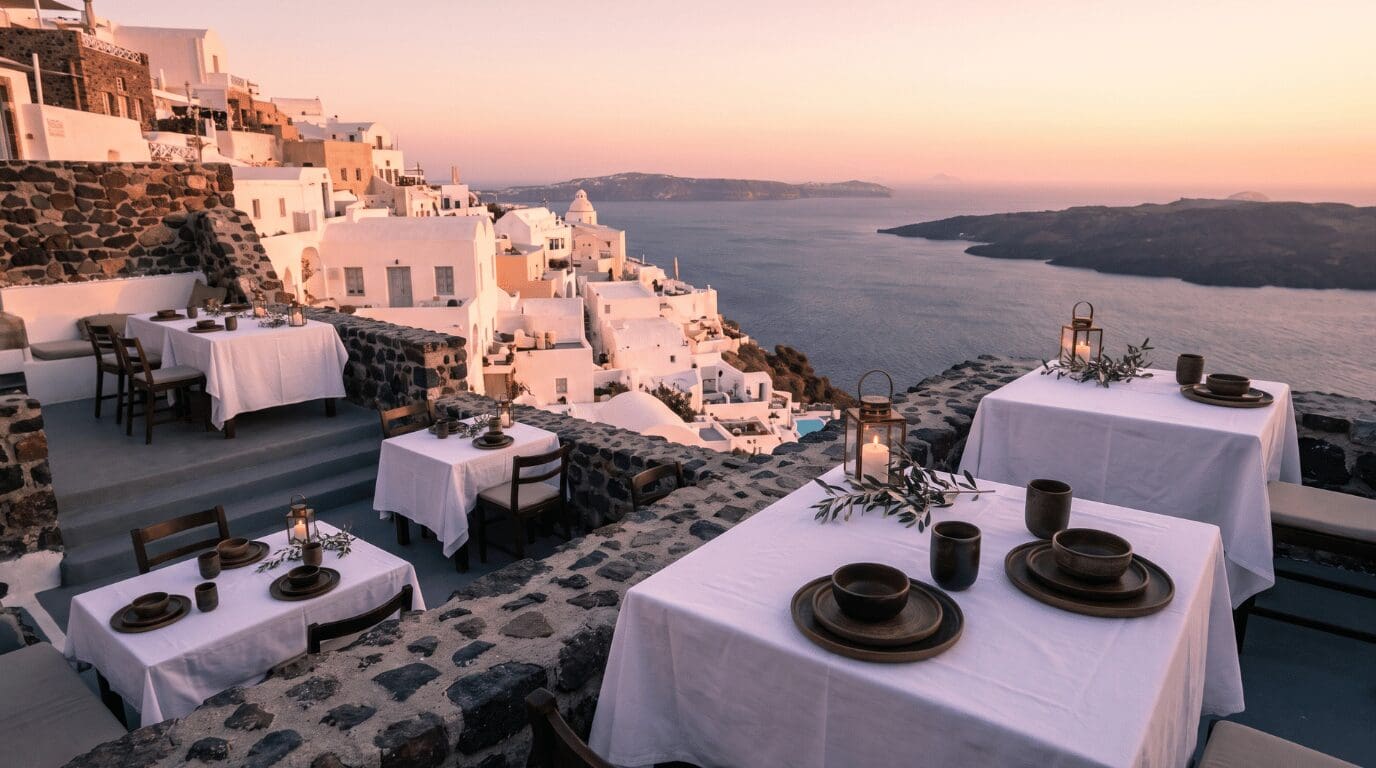
The setting does the rest. From the highest point of Oia’s caldera, the terrace looks straight out over the open caldera to the Aegean sunset, the kind of backdrop that turns an ethical dinner into an heirloom memory.
You can experience it two ways. Reserve a table at Sunset Terra for a slow, paired tasting menu, or stop by Bites & Bubbles by Sunsets for walk-in cocktails and small plates with the same view.
For more on the island’s volcanic grapes, read our beginner’s guide to Santorini wine, and to plan the meal itself, see our take on fine dining in the Cyclades.
Key Takeaways
Zero waste fine dining is not a compromise. Done well, it sharpens flavor, deepens the story on the plate, and lightens the footprint of a great evening out.
- Food service drives 28 percent of global food waste, so restaurant choices matter.
- Hyper-local sourcing, whole-ingredient cooking, composting, and reservation planning cut waste at every stage.
- Sustainability and flavor reinforce each other, they do not compete.
- Santorini Sunsets delivers the model with volcanic wines and a caldera-view terrace, open since 1992.
Great food, a glowing Aegean sunset, and a kitchen that respects the island. That is the point.
Taste the zero-waste kitchen
Reserve a table at Sunset Terra
Local produce, zero-waste cooking and island wines, served at the highest point of Oia.
Frequently Asked Questions
What is zero waste fine dining?
Zero waste fine dining is a restaurant philosophy that aims to send little or nothing to landfill by using each ingredient fully, sourcing locally, and recovering scraps through composting or reuse, all while keeping high-end quality.
Does zero waste cooking change how the food tastes?
It usually improves flavor. Whole-ingredient technique concentrates taste, local produce arrives at peak ripeness, and menu discipline pushes chefs toward creativity rather than excess.
How does a Santorini sunset restaurant reduce food waste?
Through hyper-local sourcing from volcanic soil, whole-ingredient cooking that turns trimmings into stocks and sauces, composting, and reservation-led portion planning that matches prep to confirmed guests.
What should I look for in a sustainable Santorini restaurant?
Look for proof rather than slogans: named local producers, a focus on volcanic wines like Assyrtiko, whole-ingredient menus, visible composting, and staff who can explain the sourcing behind each dish.
Where is Santorini Sunsets located?
Santorini Sunsets sits at the highest point of Oia’s caldera in Santorini, Greece, in an 18th-century Cycladic homestead refined since 1992, looking out over the open caldera to the Aegean sunset.